Unveiling The Operating Logic Of Highly Profitable Children's Playgrounds
Mar 09, 2026
The booming indoor playground market has attracted a flood of investment, leading to fierce competition. Parents' needs are also evolving – they not only want a place for their kids to "expend energy," but also a safe and enjoyable learning environment where they themselves can relax while playing. Operators need to effectively manage the entire process from customer acquisition (lead generation), customer experience (customer retention), to repeat purchases (customer loyalty) to achieve effective marketing and better market penetration.
1. Redefining the Product: From Equipment Stacking to Emotional Resonance
Successful children's playgrounds need to meet three criteria: visually appealing (high-quality visuals and strong themes), fun (rich and age-appropriate challenges), and good value (providing parents with excellent value for money). Modern young parents are more aesthetically conscious, requiring playgrounds to pursue aesthetically pleasing indoor theme park design, employing low-saturation, well-designed, and themed storytelling scenarios.
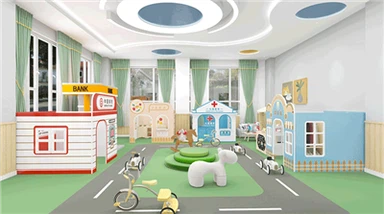
"Playing well and playing with value" is the core demand of parents. Deeply integrating education and play, establishing a "Play + Growth" ecosystem, can effectively increase average transaction value and user stickiness. For example, commercial indoor play structures like a role-playing town can be built, featuring mini fire stations, supermarkets, and other simulated scenes, allowing children to learn about the world through role-playing.

2. Precise online and offline customer acquisition
(1) Promotion on short video platforms such as TikTok
Localized TikTok operation: Shoot creative videos that hit the pain points and enjoyment points of the target audience. For example, content could highlight family-friendly spots where parents can relax while children have fun, offering practical solutions and emotional appeal to boost engagement and local relevance.
(2) Offline experiential marketing
During the opening phase, a strategy of offering free trials of some projects can be implemented to attract a large number of parents and children to the store; at the same time, free trial cards can be distributed from time to time to attract potential consumers, creating a booming atmosphere and gaining a good reputation. During holidays, summer and winter vacations, taking advantage of the surge in demand for indoor amusement, discounted parent-child group purchases or discounts can be used to attract a large number of tourists.
3. Breaking ticket dependence and building a "1+N" diversified ecosystem
Relying solely on ticket revenue is insufficient to cover the ever-increasing rent and labor costs, and is highly susceptible to price wars. A mature marketing strategy must focus on tapping the lifetime value of each user and building a "1+N" lifestyle consumption circle.
Immersive Dining: Develop themed dining options (such as dinosaur-themed meals) and parent-child DIY baking. Effectively extend stay time and significantly increase repeat purchases.
Party Planning: Provide one-stop birthday party services, including ceremonies, meals, playtime, and photography. This is a core high-profit business.
Childcare Services: Launch holiday "kids-free" packages or half-day childcare services, precisely capturing the needs of parents for "free time" while ensuring children have fun.
Cross-Industry Retail: Sell IP derivatives, educational toys, and even offer children's craft and sports classes, expanding into diversified retail.
4. Membership System Innovation
Many people think of simple membership discounts, but a game-like membership system can be designed to better stimulate customer engagement and increase engagement. For example, each time you check in, you can earn a badge. Collect enough badges to redeem exclusive gifts. Gifts should be diverse and practical, catering to both adults and children. Case studies show that this effectively increases repeat purchase rates.
5. Technology Empowerment: Enhancing Efficiency and Experience
(1) Data-Driven Decision-Making
Analyze peak visitor times, popular attraction preferences, and consumption patterns using data collected from the membership system. Utilize these insights to optimize scheduling, adjust equipment layout, and precisely target marketing information. For example, place highly attractive attractions deeper within the park to encourage visitor flow through other consumption areas.
(2) Technological Interactive Experiences
Introduce VR (Virtual Reality)/AR (Augmented Reality) interactive experiences, light and shadow projections, and other technological projects. The fusion of technology and art creates a new premium experience.
The market never lacks equipment; what it lacks are spaces that truly understand children and parents and continuously create surprises and emotional experiences. We hope this strategic breakdown will inspire your next successful project.